



Construction Industry Trends and Innovations in 2022
Got a story? Email news@constructionarea.co.uk
2022 will be a year of reemergence and expansion in the construction industry, following a volatile era of revising projections and altering expectations. Rising construction prices and labour shortages continue to put pressure on the sector to come up with innovative new solutions, while tighter rules restrict the margin for mistake and waste.
Construction is a large sector that encompasses a wide range of construction and civil engineering activities. Carpentry, road building, bridge development, and home design are all jobs in the construction industry. Because it is responsible for building the infrastructure for cities, communities, and countries, this industry is one of the largest in the world.
Building and infrastructure construction, demolition, remodelling, maintenance, and repair are all part of the construction industry sector. It includes everything from design and surveying through structural construction and finishing services like painting and decorating.
The construction industry is divided into three sections. General contractors, speciality trade contractors, and civil engineering contractors are among them. Within the broader industry, each section serves a distinct purpose.
For residential and commercial construction projects, general contractors construct buildings and roadways. On each project, these firms supervise a number of subcontractors. A general contractor is in charge of organizing and supervising the work of plumbers, painters, and electricians on construction projects.
Construction sector working conditions are harsh and demanding. These workers are needed to operate outside in a variety of difficult conditions, including extreme cold and heat. Because he works long shifts requiring significant physical exertion, a construction worker must be physically fit.
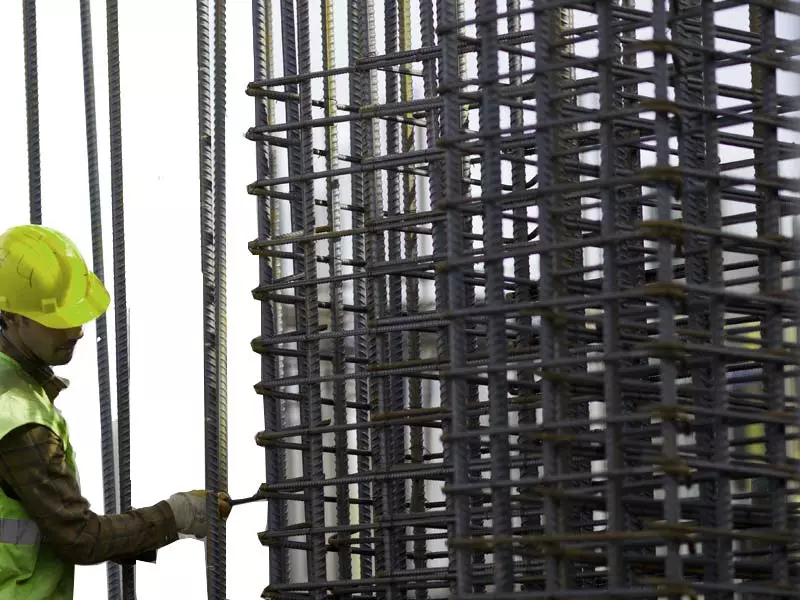
The majority of construction workers utilise risky tools and equipment. Many are compelled to labour at great heights in incomplete constructions. Construction labour has resulted in numerous injuries, making it a dangerous occupation. Construction workers must wear protective equipment such as hard helmets, gloves, and eye protection. This reduces the chance of damage from falling debris or substances.
The Coronavirus Pandemic
The COVID-19 epidemic has altered the way the construction industry does work, from project scheduling and closure to employing personnel and dealing with clients, since last year. The pandemic's aftermath will have an impact on numerous industrial developments in the future. Construction sites are changing as new technology improves the ability to win projects and increases profit margins. The roles of industry professionals and frontline employees are shifting as a result of trends and movements.
After agriculture, the construction industry is the world's second largest sector and one of the major job creators. Building construction, heavy and civil engineering construction, and speciality trade contractor are the three primary categories of the construction business. There are hundreds of job profiles in the overall construction business since it is an amalgamation of numerous different sorts of construction organisations.
Embracing these construction trends will be advantageous for any construction business as the industry grows more competitive and the market transforms.
The COVID-19 epidemic has had a significant influence on the construction industry, with improved state rules stressing cleanliness and tight safety standards already in place. This might involve increased union influence in projects, thereby increasing project costs and timelines.
Blockchain technology, according to experts, is boosting relationships in the construction industry since it's a key component in creating a more secure and efficient workflow that benefits all parties involved.
Construction's largest liabilities are still personal safety and equipment loss. Drones can undertake activities that require scaling supertall structures in place of human personnel to avoid damage. Drones may be used as on-site security equipment to cut labour expenses and reduce the danger of theft, keeping projects on track and reducing delays.
A significant increase in labour demand has been one of the most visible building developments in recent years. Quality labour is costly and difficult to come by, while robots do help to fill up the gaps. Despite the best efforts of these robots, more educated employees will be required to handle and evaluate the data generated by new technologies. Women are moving forward to fill more competitive jobs, which is a good thing.
Women make up only 10.9 percent of construction industry jobs, according to the Bureau of Labor Statistics, and industry hiring trends show a 94 percent increase in female-owned construction companies from 2007 to 2018; additionally, 30 percent of construction companies promoted a woman to a senior position in 2018.
In the construction industry, mobile applications enable unprecedented jobsite access, including real-time inspections, on-site accountability, and precise measurements obtained with a cell phone camera.
Buildings that are environmentally friendly - Green Building
Homebuyers, renters, and business tenants have come to demand green construction. Unfortunately, despite their long-term benefits, many sustainable and eco-friendly elements remain a luxury - but this will change over the next decade as ecotech and sustainable building become more widespread.
Green construction encompasses both the technology that reduces a building's carbon footprint and the usage of resources, as well as the design styles that do so. Maybe an even more powerful motivator for green construction is evidence of its benefits to tenants. Green buildings, according to research, can have a good psychological and physiological influence on residents and even passers-by.
These construction industry factors are fast transforming the worldwide market – growing pricing and skilled labour shortages are projected to persist in the future decade, and regulatory obstacles may get more stringent as workplace safety and climate change adaption become more scrutinised. Builders and developers may decrease risk, win more contracts, and profit by embracing new methods, using new technology, and investing in new projects.
Why would you like to work in the construction industry?
A high school diploma is required for many professions in the construction industry. General assistance, workers, and apprentices are examples. More advanced professions need education and certification, which ensures that an individual is skilled in a certain trade. Electricians, plumbers, and heating and air conditioning specialists are just a few examples. Many construction occupations, particularly those in commercial or residential development, need a licence. Electricians, plumbers, and crane operators are just a few examples of occupations that need a special licence. These permits are intended to verify that safety regulations are fulfilled.
Whether you are just starting out in the profession or have been working for a while and are considering a career change, there is a multitude of possibilities available. When it comes to breaking into the construction industry, there are various paths you might pursue. There will be chances for you whether you have recently graduated from high school, are a university graduate, or have been in the profession for some time and are exploring a career shift.
You have a variety of options available to you, including finding an entry-level job and working your way up, starting an apprenticeship, studying for a degree and obtaining a graduate position that is more managerial in nature, or leveraging your current work experience to advance into a more senior construction role. You will be able to discover a work that meets your needs regardless of your job history position.
Choosing a construction career may be a very rewarding experience. The construction industry is the place to be if you're searching for a challenging career in a large field where your talents will always be appreciated and in high demand.
Other news from “Construction & Property”